⚡️ Apple Unveils Multimodal AI for De Novo Protein Design
An unexpected breakthrough from Apple ML Research: the team demonstrated that de novo functional protein design can be unified into a single streamlined transformer, rendering multi-stage cascade pipe…
Alex Carter
Sep 13, 2026•5 min read
01
⚙️ Eliminating Pipelines: How Joint Co-Design Works
Conventional computational biology relied on two fragmented phases: first, a diffusion model (e.g. RFDiffusion) synthesized a geometric backbone, then a sequence model (e.g. ProteinMPNN) solved the inverse folding problem. This split inevitably compounded errors between stages.
Apple's SimpleDesign unifies sequence and geometry: a multimodal transformer co-denoises discrete amino acid tokens and continuous 3D backbone coordinates simultaneously using a joint loss function (Cross-Entropy + Mean Squared Error).
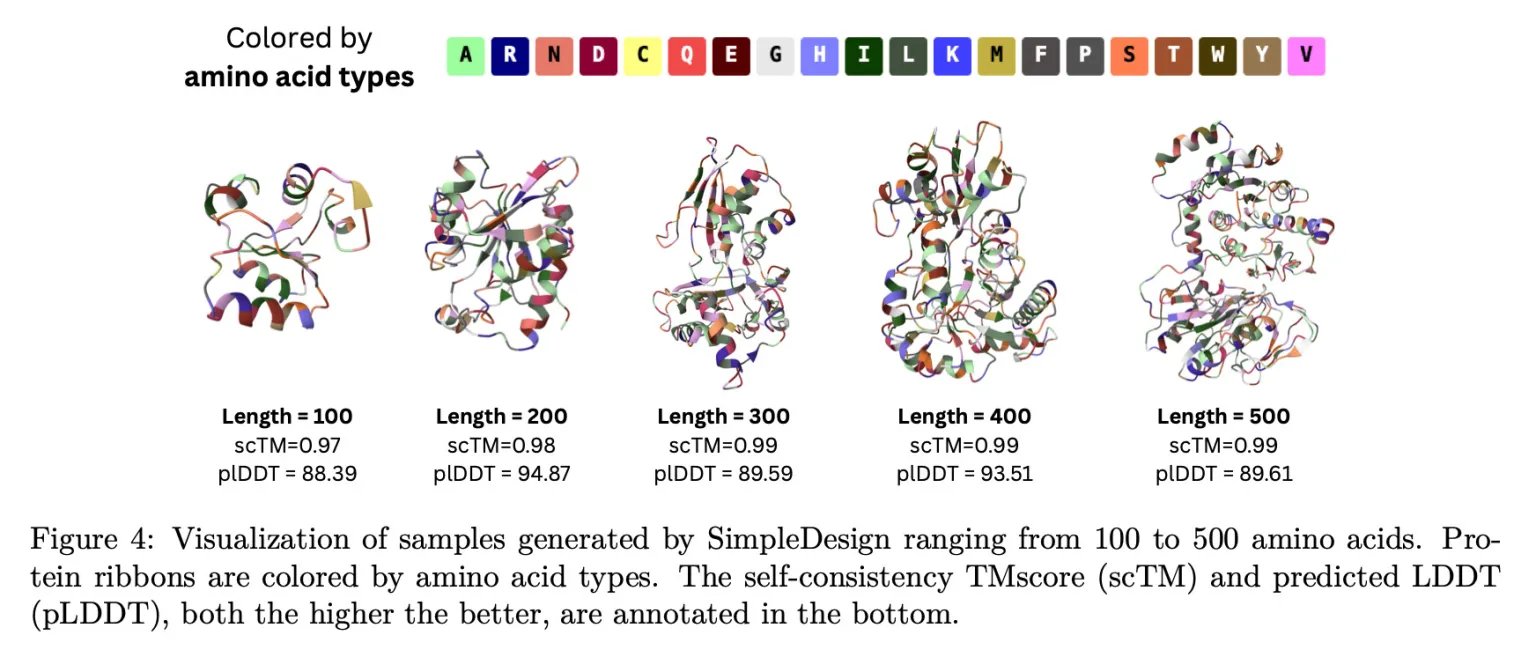
This eliminates sequence-structure mismatch, enabling the design of stable macromolecules up to 500 residues without iterative refinement loops.
02
Apple SimpleDesign Technical Benchmarks
: 0.97 – 0.99 (flawless structural alignment)
: Up to 94.87 (state-of-the-art accuracy)
: 0.97 – 0.98 vs Protein Data Bank archive
: 100 to 500 amino acid residues
: Joint Sequence-Structure Multimodal Transformer
03
💊 Pharmacological & Therapeutic Impact
Engineering functional macromolecules with scTM > 0.98 self-consistency paves the way for plastic-degrading industrial enzymes, rapid-response synthetic vaccines, and tailored viral traps.
Apple's decision to open-source model weights and code positions the Cupertino giant as a serious infrastructure contender in computational life sciences.
30 seconds
Key facts
An unexpected breakthrough from Apple ML Research: the team demonstrated that de novo functional protein design can be unified into a single streamlined transformer, rendering multi-stage cascade pipelines obsolete.
An unexpected breakthrough from Apple ML Research: the team demonstrated that de novo functional protein design can be unified into a single streamlined transformer, rendering multi-stage cascade pipelines obsolete.
Want to go deeper?
The Hook & Core Paradox
Strategic significance of "⚡️ Apple Unveils Multimodal AI for De Novo Protein Design"
Between the Lines (Market & Margin Shift)
This development reshapes competitive dynamics in the sector.
The Bottleneck (Physical & Engineering Barrier)
Regulatory frameworks and infrastructure readiness remain critical.
3–5 Year Horizon (Structural Shift)
Mainstream adoption expected within 3–5 years.
Chronicle: Past 5 Years
2024–2025
Initial research phase and prototype validation.
2026
Production deployment and commercial integration.
Forecast Scenarios
3 Years
Ecosystem consolidation and protocol standardization.
5 Years
Ubiquitous deployment across operational platforms.
10 Years
Foundation for next-generation autonomous systems.
⚡️ Apple Unveils Multimodal AI for De Novo Protein Design | NewsAndNext