Tesla Cybercab & Optimus Army: The Complete Austin Breakdown
Full teardown of Tesla's steering-wheel-free robotaxi and the 22-DoF hand architecture of Optimus Gen 3.
Alex Carter
Sep 04, 2026•5 min read
01
Passenger Experience and Control-Free Cabin
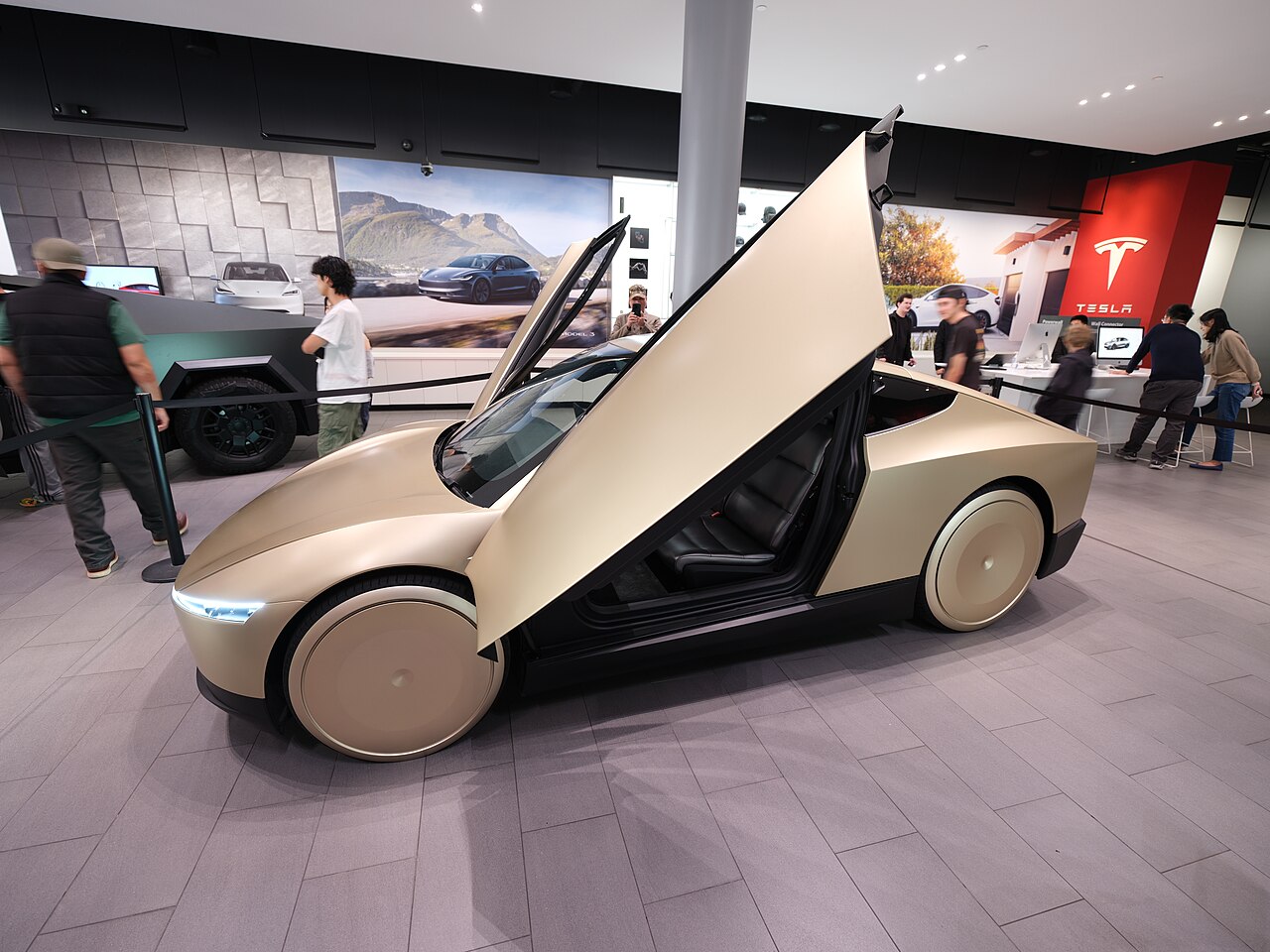
Cybercab is a compact, futuristic two-seater finished in gold tones with motorized butterfly doors. The vehicle has no steering wheel, pedals, mirrors, or charging ports.
Fully autonomous Level 5 architecture lets passengers relax, work, or sleep while navigating via a central touchscreen display.
Target operating cost is approximately $0.20 per mile, undercuting conventional public transit fares in major metropolitan areas.
02
Hardware Platform and Sensor Architecture
1. Wireless Inductive Charging: Operating at 85 kHz with 93% efficiency, eliminating mechanical plugs and enabling automated fleet turnaround.
2. AI5 Compute Stack: Powered by Tesla's next-gen AI5 neural accelerators, processing 8 high-resolution cameras via end-to-end vision models without LiDAR.
3. Optimus Gen 3 Kinematics: 22 degrees of freedom (DoF) hand actuation driven by brushless servomotors and zero-backlash tendon drives.
03
Autonomy Milestone Timeline (2016–2026)
• 2016: Initial cross-country autonomous transit commitment on Hardware 2.0.
• 2019: First-generation FSD silicon debut with commercial robotaxi projections.
• 2021: Tesla Bot announcement establishing humanoid robotics roadmap.
• 2024: Optimus Gen 2 demonstration with integrated tactile sensing.
• 2026: Pre-production Cybercab unveiling without driver controls, initiating closed-course testing in Texas.
04
Regulatory and Legal Hurdles
While the vehicle platform is engineered for immediate deployment, regulatory agencies (NHTSA, UNECE) have not yet established commercial certifications for passenger vehicles devoid of manual controls.
30 seconds
Key facts
Full teardown of Tesla's steering-wheel-free robotaxi and the 22-DoF hand architecture of Optimus Gen 3.
Full teardown of Tesla's steering-wheel-free robotaxi and the 22-DoF hand architecture of Optimus Gen 3.
Want to go deeper?
The Hook & Core Paradox
Strategic significance of "Tesla Cybercab & Optimus Army: The Complete Austin Breakdown"
Between the Lines (Market & Margin Shift)
This development reshapes competitive dynamics in the sector.
The Bottleneck (Physical & Engineering Barrier)
Regulatory frameworks and infrastructure readiness remain critical.
3–5 Year Horizon (Structural Shift)
Mainstream adoption expected within 3–5 years.
Chronicle: Past 5 Years
2024–2025
Initial research phase and prototype validation.
2026
Production deployment and commercial integration.
Forecast Scenarios
3 Years
Ecosystem consolidation and protocol standardization.
5 Years
Ubiquitous deployment across operational platforms.
10 Years
Foundation for next-generation autonomous systems.
Tesla Cybercab & Optimus Army: The Complete Austin Breakdown | NewsAndNext