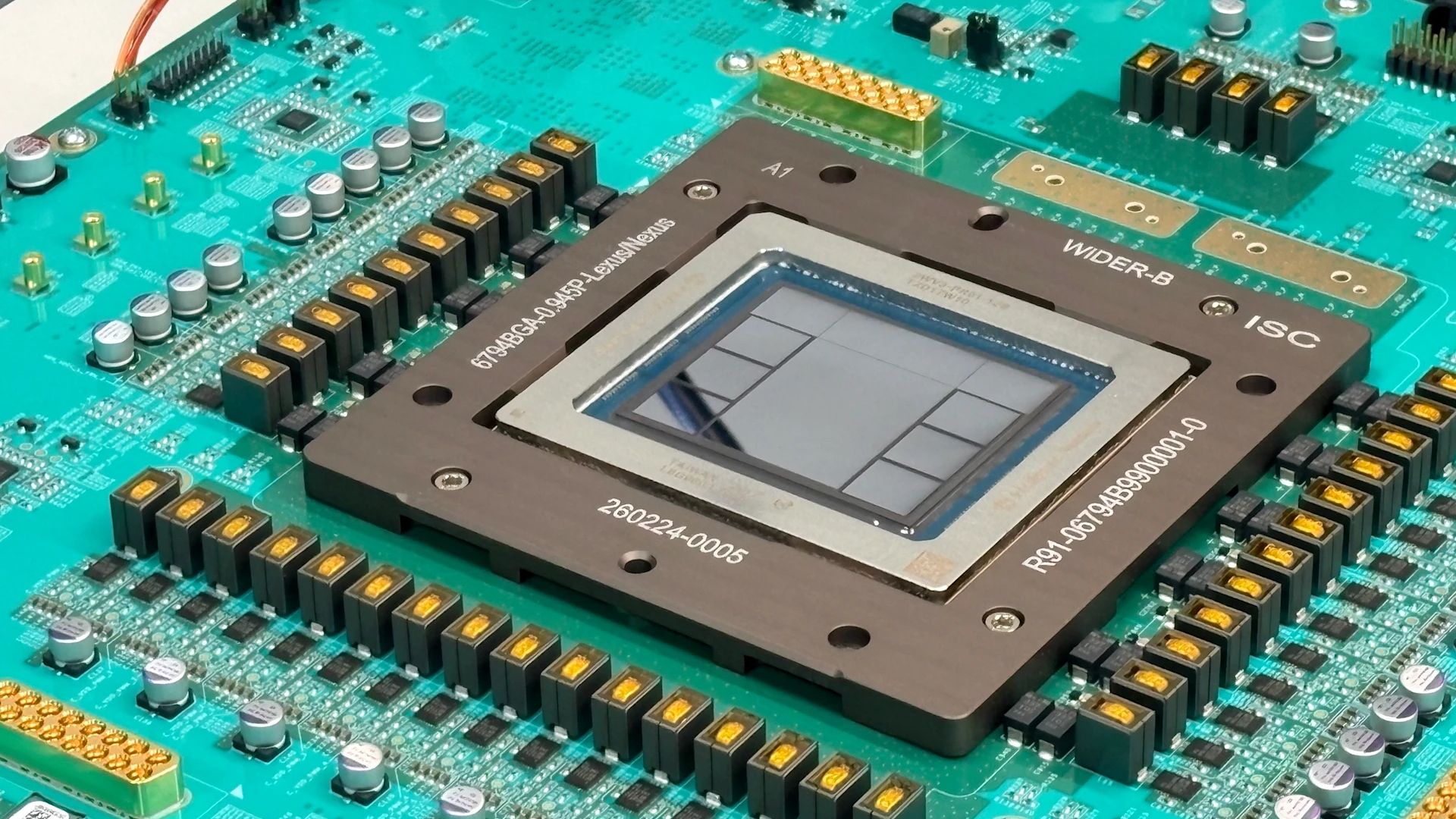
Why Can't TSMC Keep Up? OpenAI Secretly Contracts Samsung to Forge 2nm AI Chips
The Silicon Valley arms race is hitting a hard physical wall: no matter how billions flow into model research, hardware delivery dates are held hostage by TSMC capacity allocations. Facing severe comp…
Alex Carter
Sep 10, 2026•6 min read
01
1. Situation Analysis: The Total TSMC Monopoly Bottleneck
Over 90% of global top-tier AI accelerators are stamped at TSMC fabs. NVIDIA, Apple, AMD, and Google fiercely outbid each other for limited CoWoS packaging capacity.
OpenAI realized that reliance on third-party GPU vendors puts its future models at the mercy of competitor delivery schedules.
02
2. The Secret: Gate-All-Around (GAA) Architecture
Samsung was the first foundry to transition from FinFET to Gate-All-Around nanosheet transistors, providing superior electrostatic control at ultra-low operating voltages.
OpenAI's custom accelerator design emphasizes matrix arithmetic, eliminating general-purpose silicon overhead and boosting power efficiency by 35% compared to contemporary chips.
03
3. By the Numbers: Silicon Scale
• Wafer Capacity: Samsung reserved 15,000 wafers per month for OpenAI starting late 2026.
• Packaging: Utilizes Samsung I-Cube advanced packaging, combining HBM4 memory directly over the compute die.
• Cost Advantage: Production costs projected at 28% lower than equivalent TSMC N2 wafers.
04
4. Editorial Verdict
💡 Core Takeaway: OpenAI's shift from pure AI software lab to vertically integrated fabless chipmaker signals that future AI supremacy is decided in cleanrooms, not prompts.
05
5. Outlook: Silicon Independence and Foundries Competition
OpenAI diversifying beyond TSMC injects crucial competitive balance into global semiconductor fabrication. For the broader industry, this reduces concentration risk and accelerates custom silicon deployment across hyperscalers.
30 seconds
Key facts
The Silicon Valley arms race is hitting a hard physical wall: no matter how billions flow into model research, hardware delivery dates are held hostage by TSMC capacity allocations. Facing severe compute constraints, OpenAI bypassed the Taiwanese bottleneck to build proprietary silicon with Samsung.
The Silicon Valley arms race is hitting a hard physical wall: no matter how billions flow into model research, hardware delivery dates are held hostage by TSMC capacity allocations.
Facing severe compute constraints, OpenAI bypassed the Taiwanese bottleneck to build proprietary silicon with Samsung.
Want to go deeper?
The Hook & Core Paradox
Strategic significance of "Why Can't TSMC Keep Up? OpenAI Secretly Contracts Samsung to Forge 2nm AI Chips"
Between the Lines (Market & Margin Shift)
This development reshapes competitive dynamics in the sector.
The Bottleneck (Physical & Engineering Barrier)
Regulatory frameworks and infrastructure readiness remain critical.
3–5 Year Horizon (Structural Shift)
Mainstream adoption expected within 3–5 years.
Chronicle: Past 5 Years
2024–2025
Initial research phase and prototype validation.
2026
Production deployment and commercial integration.
Forecast Scenarios
3 Years
Ecosystem consolidation and protocol standardization.
5 Years
Ubiquitous deployment across operational platforms.
10 Years
Foundation for next-generation autonomous systems.
Why Can't TSMC Keep Up? OpenAI Secretly Contracts Samsung to Forge 2nm AI Chips | NewsAndNext