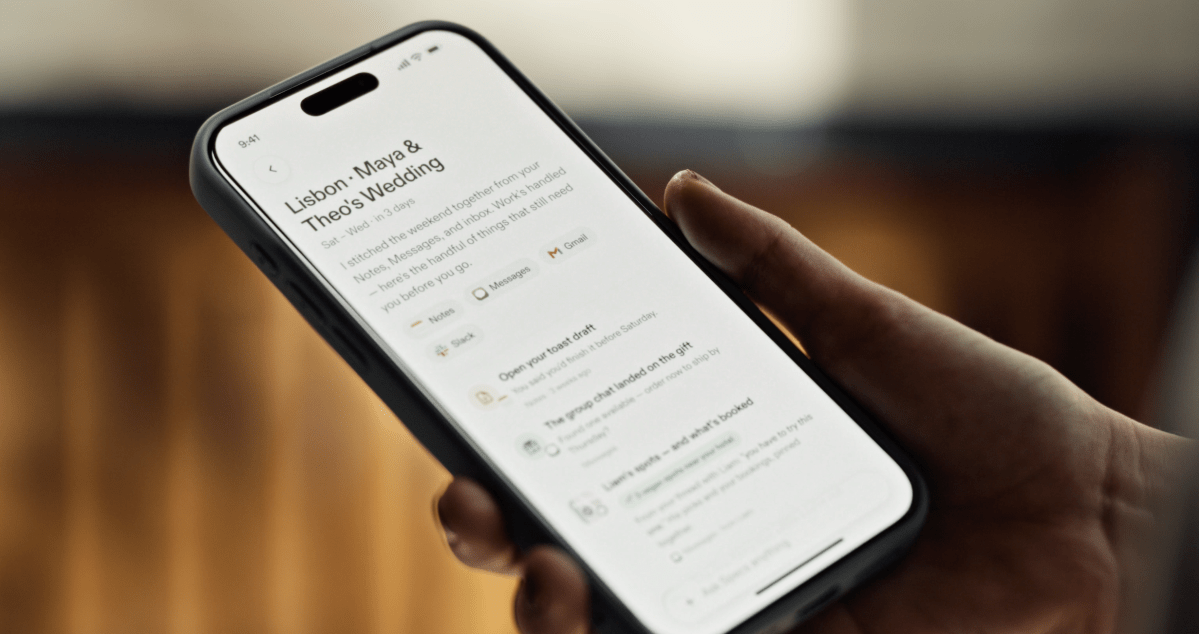
Snap Spectacles 5 Unveils Open Snap OS and Standalone AI Agent
The standalone Snap Spectacles 5 combine Snap OS with an optical waveguide engine delivering a 45° FoV. Dual Qualcomm processors power on-device spatial tracking, and the Specs AI multimodal model int…
Alex Carter
Sep 17, 2026•5 min read
01
Optical Leap: Silicon and Waveguide Projectors Replace Cables
👓 Waveguide Engine: Liquid crystal on silicon (LCoS) micro-projectors output sharp spatial overlays across a 45° diagonal FoV, visible even under direct sunlight.
🔋 Thermal Equilibrium: By dividing compute tasks between two dedicated silicon packages, Snap achieved 45 minutes of continuous untethered spatial tracking without active fan cooling.
02
Snap Spectacles 5 Hardware Profile
: Snap OS (Open Developer Tier)
: 226 g balanced frame
: LCoS Micro-Waveguide (37 PPD)
: 6-DoF Optical SLAM (4 Cameras)
03
Specs AI Assistant: Understanding Physical Context
🧠 Multimodal Spatial Perception: The on-device vision pipeline continuously identifies everyday objects, reading text and projecting contextual interactive 3D widgets directly over physical surfaces.
🌐 Developer Freedom: With Snap OS opening up low-level sensor access, teams can deploy custom neural models and spatial canvas experiences directly via WebAssembly.
30 seconds
Key facts
The standalone Snap Spectacles 5 combine Snap OS with an optical waveguide engine delivering a 45° FoV. Dual Qualcomm processors power on-device spatial tracking, and the Specs AI multimodal model interacts with real-world objects with a frame render latency under 13 ms.
The standalone Snap Spectacles 5 combine Snap OS with an optical waveguide engine delivering a 45° FoV.
Dual Qualcomm processors power on-device spatial tracking, and the Specs AI multimodal model interacts with real-world objects with a frame render latency under 13 ms.
Want to go deeper?
The Hook & Core Paradox
Why does "Snap Spectacles 5 Unveils Open Snap OS and Standalone AI Agent" matter?
Between the Lines (Market & Margin Shift)
Micro-projectors beam high-brightness photons through holographic waveguides directly into the retina, synchronized via low-power spatial SLAM algorithms running on dedicated silicon.
The Bottleneck (Physical & Engineering Barrier)
Integration complexity remains the primary barrier.
3–5 Year Horizon (Structural Shift)
Spatial computing glasses will replace everyday smartphone displays for contextual messaging, ambient navigation, and hands-free logistics.
Chronicle: Past 5 Years
2024–2025
Initial research phase and prototype validation.
2026
Production deployment and commercial integration.
Forecast Scenarios
3 Years
Ecosystem consolidation and protocol standardization.
5 Years
Ubiquitous deployment across operational platforms.
10 Years
Foundation for next-generation autonomous systems.
Snap Spectacles 5 Unveils Open Snap OS and Standalone AI Agent | NewsAndNext